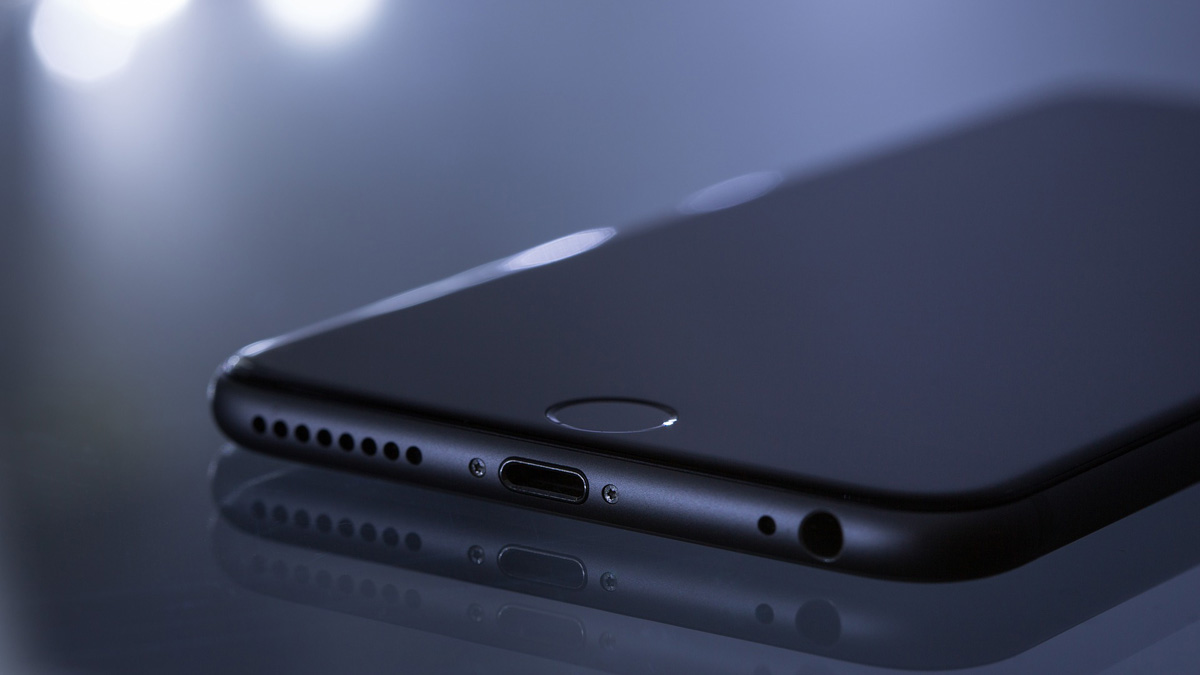
In the world of wireless mobile devices, cellphones are one of the most well known. And, like all wireless devices, cellphones need antennas. As is, no doubt, abundantly clear from previous articles, when designing antennas for mobile devices there will be challenges to overcome due to the widely varied circumstances of use. This, of course, applies to cellphones as much as to Bluetooth and any other mobile technology. However, due to certain requirements of cellular networks, designing cellphone antennas has its own unique challenges to overcome.
Summary of Basic Mobile Antenna Challenges
As with all mobile device antennas, cellphone antennas face challenges related to the various environments they are subjected to. Proximity to a person will affect performance, and being located in metal buildings will greatly hinder connectivity.
Due to the small package size, there are always constraints to the size of the antenna and location within the device. For cellphones specifically, some of the frequencies used are low enough that it is almost certain a full-sized antenna will not fit in the allotted packaging.
The antenna also needs to be strategically located within the device. This is because a cellphone usually ends up being used right next to a person’s head, so the antenna needs to be placed in a part of the packaging away from where the head will be as much as possible.
All of these considerations can be overcome by careful designing, of course, but the net result usually ends up being lower antenna gain than desired. This means that the phone will tend to increase its transmit power to connect, which in turn means shorter battery life. Also, coverage may not be the best. However, with the quantity of cell towers scattered over the countryside these days, this problem is not a major issue, and has been more or less successfully overcome. Still, the antenna should not be overly directional, or there will be coverage issues for other reasons.
Cellphone Antennas: Multiband Complexity
Probably the single most exacting trouble with a cellphone antenna is the sheer quantity of cellular bands.
There are four major cellular bands: 700 MHz, 850 MHz, 1.9 GHz, and 2.1 GHz. As can be seen right away, that is a large range of frequencies. With a difference of 1.4 GHz between the bottom band and the high band, any single antenna attempting to cover this range is going to be a challenge to design. While it is possible to build a good-performing antenna that can neatly cover this whole frequency range (though it may end up being a tad on the large side) a better solution would be to use multiple resonances.
Now, if you examine the frequency ranges carefully, you’ll note that the two bands in the megahertz regions are close together, and the two bands in the gigahertz regions are close together as well. It would seem, then, that one potential solution would be to have two moderately broadband resonances, one covering the two lower bands and the other the two upper bands.
Or, alternatively, several independent antennas could be used. Some drawbacks with this are potentially increased size and inter-antenna interference.
Please note that the point of this article is not to design a better cellphone antenna; rather it is to show the challenges and design logic involved. Which, in turn, brings up another point. The antenna is not in a vacuum, nor is it in an infinitely large area. The antenna is going to be placed in constricted quarters. The antenna is very likely going to have to cope with large metal objects in proximity (such as batteries) as well as the occasional head and shirt pocket.
Bandwidth
To cope with the various circumstances a cellphone antenna is going to face (metal objects, heads, bodies, the occasional metal pen, etc.) the antenna simply must be broadband. It cannot be detuned so badly in everyday use that it fails to function.
Furthermore, antenna bandwidth can play into the rate of data streaming. The antenna really shouldn’t be the limiting factor when it comes to streaming data.
And it gets worse. The antenna will almost certainly be smaller than the lowest frequency used would tend to dictate. The net result is a loss of gain. The gain can be brought back to some degree by artificially resonating the antenna back to its lowest frequency, but doing so decreases the bandwidth.
So we come back to having to make a compromise — which is more important:
- Gain?
- Package size?
- Bandwidth?
In fact, for many cellular-related applications the cell-service providers determine, at least to some degree, what the minimum performance specs for the device should be, and hence its antenna.
The rest of the design involves juggling parameters and carefully choosing and implementing antenna types to meet these basic needs. Yet again, due to the many factors involved here, simulation software can make designing the antenna much easier. Of course, the antenna will need to be tested in the real world before the final product is ready.
 ARSI
ARSI 